F1 hasn’t even held four races under its most ambitious regulatory revolution in a decade… and it already finds itself in crisis mode: a summit meeting to reinvent itself.
Read more Pierre Waché on the hot seat? Rumors are circulating…
This Thursday, April 9, in the middle of a five-week break before Miami, technical directors, engine manufacturers, the FIA, and F1 authorities will meet to analyze what isn’t working and what needs to be corrected urgently.
According to several sources, six areas for improvement are already on the table. This meeting could prove decisive for the 2026 season.
Six difficulties to manage
Three races, six problems to fix: either the sign of a sport capable of reacting quickly, or proof that the 2026 regulations were introduced with more flaws than expected.
The most critical point concerns safety. Haas driver Oliver Bearman escaped after a violent crash at Suzuka, but the circumstances are deeply worrying. The incident occurred while his car was in boost mode, while the Alpine of Franco Colapinto in front of him was in energy recovery phase.
Result: a speed differential of about 50 km/h on the same straight, a situation deemed unacceptable at this level.
Safety first
The director of McLaren, Andrea Stella, had already warned about this scenario several weeks earlier. After the accident, Haas boss Ayao Komatsu was categorical: “We simply cannot ignore this.”
Read more The hunt for tenths is on for Cadillac: evolution expected in Miami
What looks like a simple racing incident actually reveals a structural flaw in the regulations and puts F1 in an emergency: correct it quickly… or accept a major risk.
But besides this obviously priority aspect to avoid a potential catastrophe, the quality of the show is also targeted, while drivers complain they can no longer fully express themselves in the intrinsic exercise of qualifying.
While the desire to simplify and make qualifying more natural is a matter of consensus, the question of the level of management—those optimization strategies sometimes judged artificial—remains more divisive as they are appreciated by some drivers like Lewis Hamilton, George Russell, or Charles Leclerc.
Expected adjustments
“The level of management in the race can probably be adjusted. And there are very different opinions in the paddock on this subject,” admits Laurent Mekies. “But the most important thing is to get closer to flat-out qualifying, and that’s what we are trying to achieve collectively when we meet.”
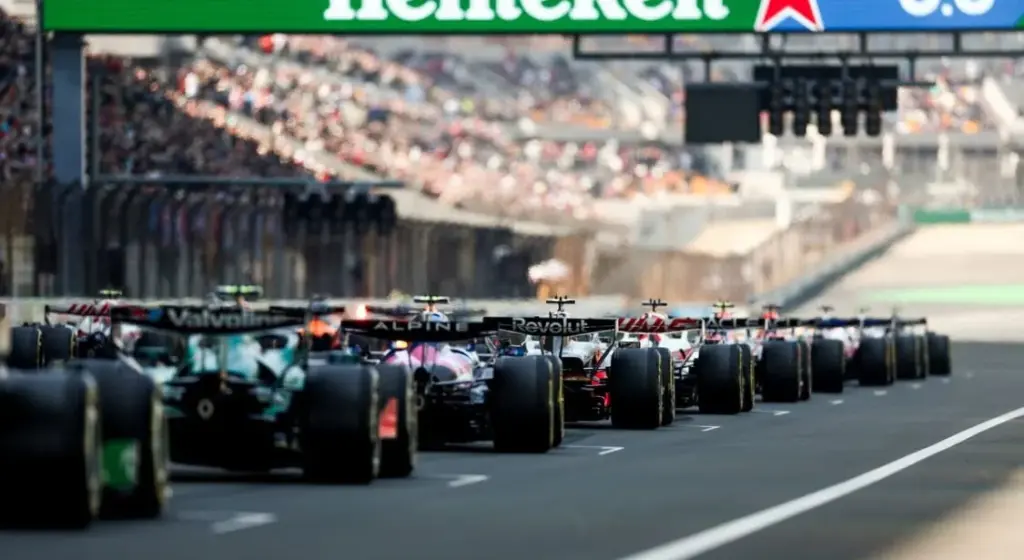
While adjustments are expected as early as 2026, particularly in the short term to correct the most visible problems like qualifying (photo above), Mekies calls for deeper reflection with a view to 2027.
“Personally, I think the focus should be on a correct solution for 2027,” he concludes. “We still have time to do enough if we want to address this for 2027 and guarantee truly flat-out qualifying. And I’m sure there are a number of small things we can do as early as 2026.”
Read more Aston Martin adopts a policy of radio silence towards its engine supplier Honda