Formula 1’s new 2026 era is already facing sharp criticism, to the point that its leaders are forced to react urgently: after only three races held under these new regulations, dissatisfaction has spread rapidly.
Read more «He is at a dead end»: Is Carlos Sainz at the end of the road in Formula 1?
This situation has pushed the FIA, F1, the teams, and the engine manufacturers to organize a strategic summit on April 9.
The context is unique, as the cancellation of the races scheduled in Bahrain and Saudi Arabia has created an unusual break in the calendar, offering an ideal window to reassess the situation.
Too much electric?
At the heart of the tensions is the new technical concept based on an equal split between the internal combustion engine and electric power. While this approach seemed coherent in theory, it is proving to be much more problematic in real-world conditions.
One of the main points of friction concerns the phenomenon of “clipping”, which occurs when a car’s battery runs out at the end of a straight. At that moment, the car suddenly loses power, creating a significant speed gap with another car still in full use of its electrical energy.
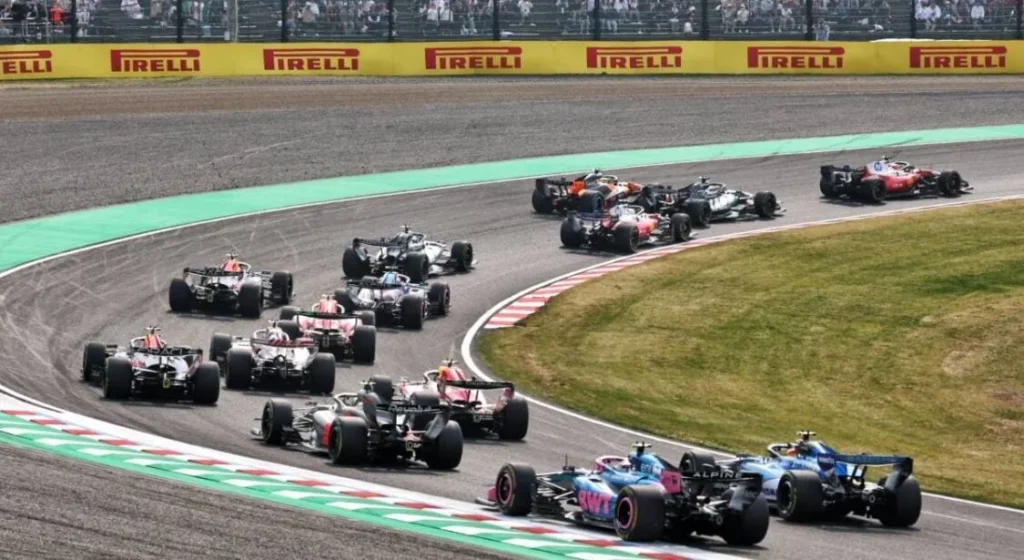
This situation poses a real safety problem, as illustrated by the spectacular accident of Oliver Bearman during the Japanese Grand Prix. Victim of a 50G impact, he found himself in a critical situation after closing a gap of nearly 45 km/h on Franco Colapinto’s Alpine, which was forced to slow down during the energy recovery phase. This episode confirmed the fears expressed beforehand by several drivers regarding dangerous speed differences.
Correcting the course
Faced with this risk, several solutions are currently being studied to limit these extreme gaps. These include the reduction of “superclipping” and adjustments to active aerodynamics, with the aim of preventing some cars from becoming rolling obstacles when they run out of energy.
Read more Haas F1 fourth in the constructors’ championship: David vs. Goliath
But beyond safety, the very essence of the discipline is also being questioned. Drivers are denouncing the disappearance of the “flat-out” qualifying lap, now impossible due to the need to manage energy throughout the entire lap.
Charles Leclerc notably expressed his frustration, highlighting that pushing the car to the limit now leads to a loss of performance, a paradoxical situation in a discipline supposed to reward pure attack. Some fast sections of the circuits are even turning into charging zones, profoundly changing the driving approach.
Decisions expected before Miami
In an attempt to respond to this crisis, several reform paths will be discussed during the April 9 meeting. The idea of increasing the share of the internal combustion engine is on the table, as is simplifying energy recovery systems to give more control back to the drivers.
Another option would be to limit this recovery to braking phases only, which would reduce or even eliminate the “lift-and-coast” phases that have become ubiquitous. The goal is clear: to rebalance the discipline in favor of driving rather than energy management dictated by engineers.
Time is running out, as the next deadline is fast approaching with theMiami Grand Prix scheduled for May 3. Any modification will have to be validated and implemented within extremely short timeframes.
Formula 1 thus finds itself faced with a major challenge: preserving its status as a technological pinnacle while avoiding sacrificing the spectacle and the essence of competition. As it stands, the 2026 regulations give the feeling of having pushed engineering to such a level of complexity that it alters the very quality of the racing.
Read more Helmut Marko wants to give priority back to driving