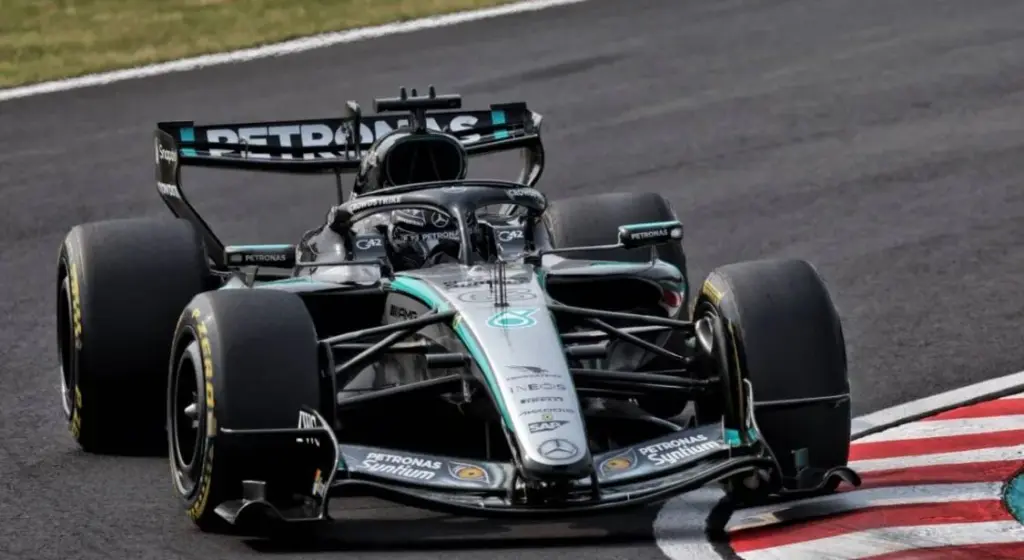
After several difficult seasons, Mercedes is once again dominating F1 in 2026. For Rob Smedley, this revival is explained by a painful… but necessary period.
Read more Ferrari: Unseen images unveil the new “Macarena” wing
After years away from its past dominance, Mercedes has made a spectacular return to the top at the start of the 2026 F1 season. The German team won the first three races, showing renewed consistency and performance.
A striking contrast to the 2022-2025 period, marked by difficulties in adapting to new regulations. The team, once ultra-dominant in the hybrid era, had then lost ground to more agile competition.
Past dominance that gave way to complacency
According to Rob Smedley, a former race engineer, this lean period partly originates from an excess of confidence accumulated during the years of dominance.
“Towards the end, there was perhaps a little too much assurance at Mercedes, something that was not necessary” he explains. Bolstered by its many titles, the team would have gradually slipped into a form of complacency.
“When you win so much, you start to think you can dominate everything. And that’s where it becomes dangerous” he adds, drawing a parallel with similar situations observed elsewhere in the paddock.
A salutary slap to bounce back
For Smedley, Mercedes’ fall ultimately had a beneficial effect. He believes that this difficult period allowed the team to deeply re-evaluate itself.
“A period where you really get shaken up does a lot of good” he states bluntly. This lean spell forced Mercedes to review its methods and abandon certain certainties.
Read more Zak Brown attacks Red Bull: «A major risk for the integrity of F1»
The shock was particularly brutal at the beginning of the ground effect era, with major problems such as porpoising and difficulties in exploiting the aerodynamic potential of the single-seater.
Humility as the key to renewal
This period in the wilderness, according to Smedley, allowed for the re-establishment of a healthier work culture within the team. Failure brought Mercedes back to a more demanding reality.
“You think you’re the kings of the world and that you’re going to dominate forever. Then you go through a difficult period that puts you back in your place” he explains.
He insists on the psychological impact of this phase: “It gives you a lot of humility. You understand that you are not above everyone else. So you get back down to earth, you put your head down and you work.”
A lesson successfully applied in 2026
Today, Mercedes seems to have learned the lessons from this complicated period. The return to the forefront in 2026 is not the result of chance, but of fundamental work undertaken after several seasons of self-reflection.
This rediscovered dynamic could well permanently place the team at the top of the hierarchy. And for Smedley, one thing is clear: without this difficult phase, this revival might never have happened.
Further proof that, even in Formula 1, setbacks can sometimes be the best drivers of success.
Read more Eric Boullier, new WRC promoter?