The position of Formula One Management and Liberty Media is very clear today: there is no objective justification to deeply disrupt Formula 1 version 2026.
Read more Jean Todt refused an offer to lead Red Bull Racing and its motorsport activities
Despite recurring criticisms about energy management or the “less pure” feeling of driving, key indicators show a trend opposite to that of a crisis.
Modern F1 operates on an extremely data-driven logic (data tracking). Everything is measured: attendance, TV audiences, digital engagement. And on these three axes, the numbers are rising.
Rising popularity
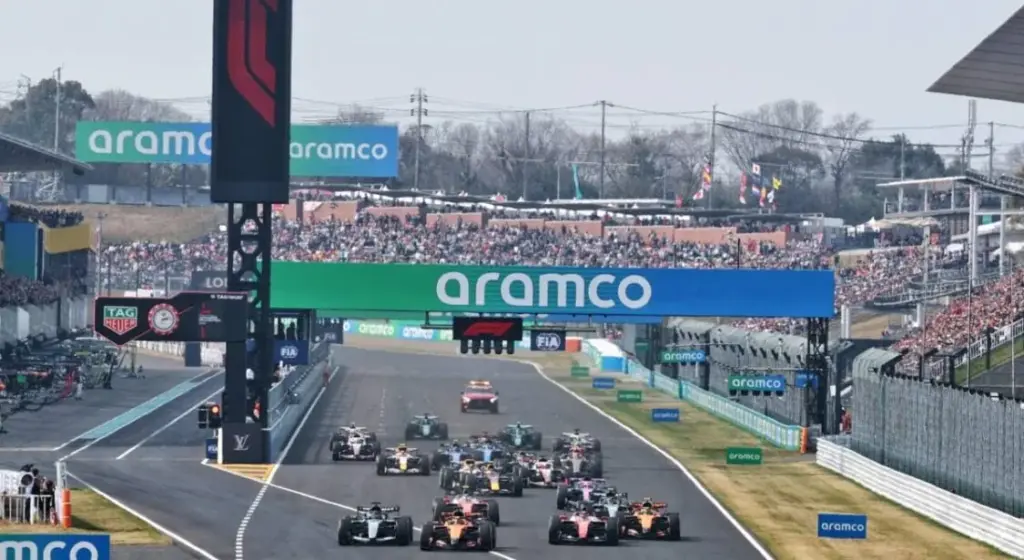
The first three races of 2026 recorded a notable increase in attendance, especially in Australia and Japan, while TV audiences jumped in the main markets, with significant increases exceeding 30%. For FOM, these data are more valuable than subjective perceptions, even widely shared on social networks.
This reveals an essential point: there is a gap between the feeling of a part of the “expert” or vocal public and the overall behavior of the audience. Some regret a more instinctive F1, where the driver was constantly attacking, while the new rules introduce a more marked strategic dimension around energy.
Read more Despite some minor issues, Oscar Piastri enjoyed the Pirelli test at the Nürburgring
But for the average spectator, the product remains attractive: visible overtakes, on-track battles, and a less fixed hierarchy than in some eras, especially compared to the years of overwhelming domination by a single driver like Max Verstappen in the recent period
Marginal adjustments
In this context, FOM’s logic is rational: as long as growth indicators are positive, a radical reform would be not only unnecessary but potentially risky. However, this does not mean an absence of adjustments. Targeted corrections — notably on qualifying phases to allow drivers to push more — are already under discussion. The goal is to refine the product without changing its fundamental architecture.
Finally, a structural bias must be taken into account: the most visible criticisms are often amplified by very active channels (podcasts, social networks), giving the impression of a widespread rejection. Yet, the overall data contradict this perception. For decision-makers, the priority remains stability and progressive optimization, rather than a step backward or a complete overhaul.
In summary, F1 2026 is not considered a problem to be fixed, but a performing product to be refined: a fundamental difference that explains the absence of drastic measures in the short term.