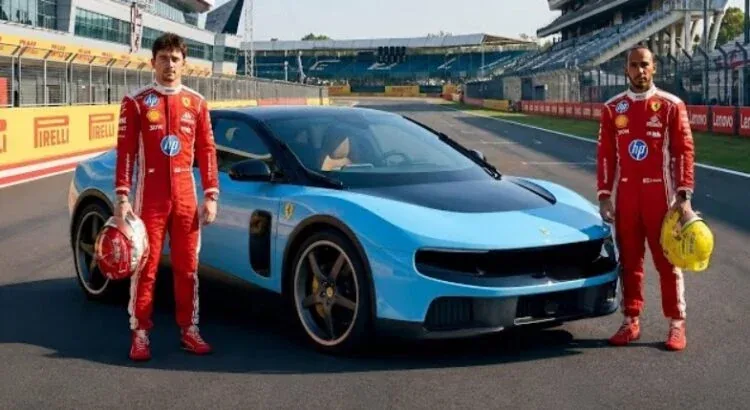
The storm caused by the Ferrari Luce is not really an automotive controversy. It is much more profound. It touches on identity, heritage, and emotion. And in this respect, Formula 1 would do well to closely observe what is currently happening in Maranello.
Read more The verdict on intrinsic speed after 5 Grand Prix? The hierarchy has shifted!
When the former president of Ferrari, Luca di Montezemolo, discovered the first 100% electric Ferrari, his reaction was as brutal as it was revealing.
“We risk destroying a myth” , he said, before adding that he almost hoped to see the famous prancing horse disappear from this car.
Sacrilege!
Criticism then poured in from all sides. Political leaders, former Ferrari collaborators, automotive industry observers: many attacked the Luce. Yet, one detail is striking. Almost no one questioned its performance. With over 1,000 horsepower, 0 to 100 km/h in 2.5 seconds, and more than 500 kilometers of range, the Luce is an impressive technological demonstration.
The problem lies elsewhere. What disturbs some enthusiasts is not what the car does. It is what it represents. For them, Ferrari is not just a car brand. It is the sound of a V12. It is a certain idea of mechanical passion. It is an emotion that is transmitted as much through the ears as through the steering wheel.
And this is precisely where the parallel with Formula 1 becomes interesting. Since the arrival of hybrid engines in 2014, F1 has developed the most sophisticated power units in the history of motorsport. Their energy efficiency is extraordinary. Their technology is fascinating. But for more than ten years, part of the audience has felt a discomfort similar to that surrounding the Ferrari Luce today.
Read more Charles Leclerc raises a key point in the debate on F1 rules
Nostalgic paradox
Cars are faster than ever. Yet, something seems to have disappeared. The sound has softened. Engines have become more complex to understand. Energy management sometimes occupies conversations more than pure performance. And many fans continue to compare current Formula 1 not to numbers, but to a memory.
The memory of a V10 screaming down a straight. The memory of a driver completing an impossible lap in the rain. The memory of raw emotion. The big mistake is often to respond to this nostalgia with technical arguments. Leaders explain efficiency gains, controlled costs, or environmental progress. All of this is perfectly true. But enthusiasts do not measure a car or a championship by a technical sheet. They measure them by what they make them feel.
Ferrari and Formula 1 today face the same challenge: evolving without breaking the emotional contract that binds them to their audience. This does not mean abandoning electrification. Ferrari needs to explore new technologies. Formula 1 needs automakers to secure its future. But there is a fundamental difference between innovating and denying one’s identity.
Reminder
Ferrari continues to produce V12s. Formula 1 is already considering rebalancing the role of the internal combustion engine in its future regulations. This is probably not a coincidence. The real issue is not choosing between past and future. It is finding a balance between technology and mythology. Because the most powerful brands in the automotive world do not only sell products.
They sell emotions. And when an innovation seems to break this emotional bond, even the most impressive technology in the world can end up rejected. The controversy around the Ferrari Luce is therefore much more than a story about an electric car. It is a reminder addressed to the entire motorsport industry: the future is built with technology, but legends survive thanks to emotions.
Read more Max Verstappen opens up about his life as a father: «I know the difficult moments will come»