Former Formula E driver and ex-Mercedes F1 reserve Sam Bird believes that the current level of FE is now close to that of F1, highlighting how much the discipline has evolved since its debut.
During the first race in 2014 in Beijing, in which he participated, the championship was still in its infancy, with significant technical constraints forcing each driver to use two cars per race.
Since then, the progress has been spectacular, particularly in terms of power, which has gone from around 150 kW in the race to 300 kW today, with peaks of 350 kW in qualifying.
A discipline in constant progression
Current single-seaters, particularly the Gen3 Evo, even show impressive acceleration performance, surpassing those of F1 in the 0 to 100 km/h exercise.
Beyond the technology, the quality of the grid has also significantly improved. Bird insists that the teams and drivers are now world-class, and considers that while F1 remains the pinnacle of motorsport, the gap with Formula E has narrowed considerably. According to him, apart from the top 7 or 8 F1 drivers, a large proportion of FE drivers would have the level to compete in the premier discipline.
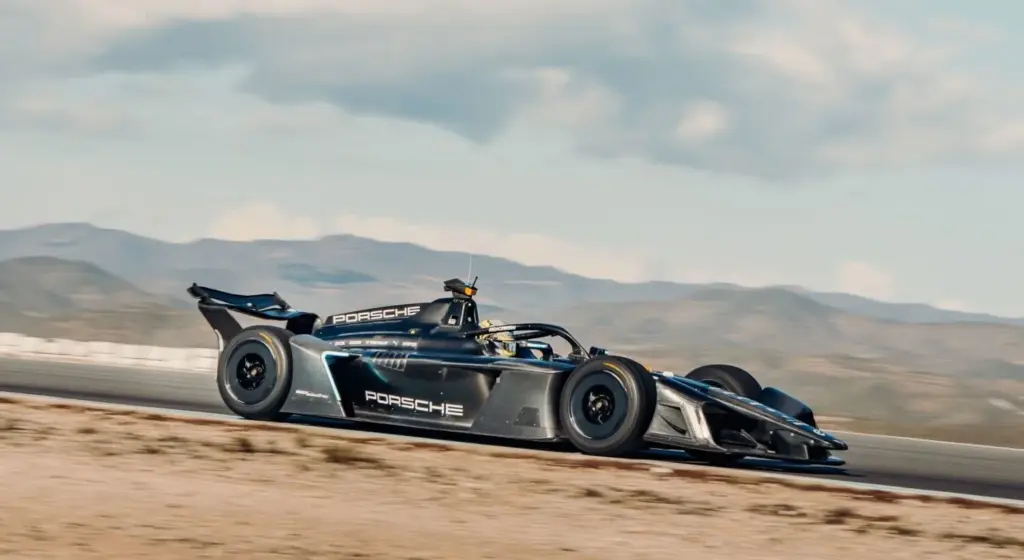
This rise in power is expected to increase further with the arrival of the Gen4 (pictured above), presented in November 2025, which marks a new major milestone. This single-seater will feature up to 600 kW (805 hp) in qualifying and attack mode, as well as 450 kW in the race with permanent all-wheel drive, representing a 50 % power increase compared to the Gen3 Evo.
Better than Formula 1?
It will also benefit from significant improvements in aerodynamics, grip, and energy recovery, with a 55 kWh battery and a regeneration capacity of up to 700 kW, representing about 40 % of the energy used in the race. Longer, heavier, and more sophisticated, it will also integrate innovations such as two distinct aerodynamic configurations and the return of classic rear brakes to accompany the increased performance.
With these advances, the Gen4 is expected to exceed the current performance of Formula 2, confirming that Formula E is no longer an experimental category but a mature discipline. In this context, Bird’s words make perfect sense: the electric series has transformed into an extremely competitive championship, whose overall level is now approaching that of Formula 1, at least in terms of talent density and sporting requirements.
No comparison really…
The only downside to this idyllic picture is a popularity still very far from the Grands Prix and a notoriety that is confidential to say the least for its actors, due to a lack of sufficient television coverage. At a time when the FIA is questioning the future of power units in F1, the irresistible evolution of FE is bound to unsettle the legislator.
But Alejandro Agag, the promoter of the electric competition, has negotiated exclusivity in this matter until 2039 with the FIA, which excludes extreme electrification of F1. The reality of the automotive market also guides the motivation of manufacturers in both disciplines, and they will undoubtedly have the last word.
Read more Doriane Pin, virtual Formula 1 driver while awaiting something better and a real test on the track