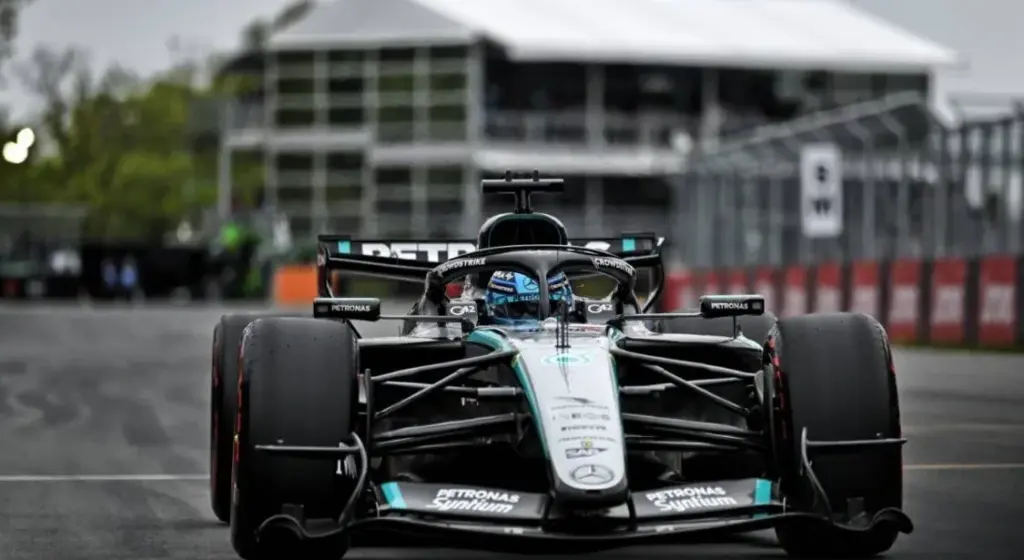
The FIA has officially changed the engine regulations before Monaco, putting an end to a technical grey area that Mercedes had largely exploited since the start of the season.
Read more George Russell already threatened? Schumacher sees Antonelli taking power at Mercedes
Formula 1 is approaching an important regulatory turning point at the Monaco Grand Prix. From this round onwards, a technical modification introduced by the FIA officially comes into effect and directly targets a solution exploited by Mercedes since the launch of the new engine regulations.
At the heart of the debate is the compression ratio of the internal combustion engine, a key element to optimize performance and energy efficiency of the new power units.
An interpretation of the regulations that caused controversy
During winter testing, several reports revealed that Mercedes HPP had found a way to run its engine with a compression ratio reaching 18:1, while the regulation normally sets a limit at 16:1.
This possibility was based on a subtlety in the technical regulations. The compression ratio was checked when the engine was in the garage and at ambient temperature.
Under these specific conditions, the engine complied with the regulations. But once on track and subjected to much higher temperatures, some mechanical characteristics could change and allow a higher ratio to be achieved.
This situation quickly caused concern among other engine manufacturers competing in Formula 1.
The FIA definitively closes the loophole
Faced with protests from several competitors, the FIA decided to intervene. The federation modified the regulatory text to prevent any exploitation of this grey area.
From now on, the compression ratio will be checked when the engine’s ambient temperature reaches 130 degrees, a condition much more representative of its actual operation on track.
According to several paddock sources, Mercedes used materials capable of expanding significantly under the effect of heat. This evolution of internal components would have allowed certain engine characteristics to change once it reached full temperature.
Read more McLaren will reintroduce its upgrade removed in Canada in Monaco
The closure of this loophole was initially planned after the Hungarian Grand Prix in August. But the FIA ultimately chose to accelerate the timeline so that the new rule is applied from the start of the European tour.
What impact on Mercedes’ dominance ?
The question now driving the paddock is simple: can this regulatory change slow down Mercedes?
The German team won the first five Grands Prix of the 2026 season and currently holds a comfortable lead of 74 points over Ferrari in the constructors’ championship.
However, some observers believe the impact could be limited. Ferrari boss Frédéric Vasseur notably considers that the development opportunities granted to engine manufacturers will probably have more influence on the hierarchy.
Engine developments could reshuffle the cards
The ADOU system (Additional Development and Upgrade Opportunities) implemented by the FIA allows manufacturers to continue developing their engines despite the partial freeze of certain technical areas.
Engine manufacturers within 2% of the best engine are allowed one upgrade per season. Those whose gap exceeds this threshold can benefit from two development opportunities.
In this context, several competitors hope to gradually reduce the gap with Mercedes over the coming months.
While closing this regulatory loophole is a political victory for the German manufacturer’s rivals, it remains to be seen whether it will have a real effect on track from the Monaco Grand Prix and in the races that follow.
Read more Franz Tost decides on Max Verstappen: «It’s very clear»