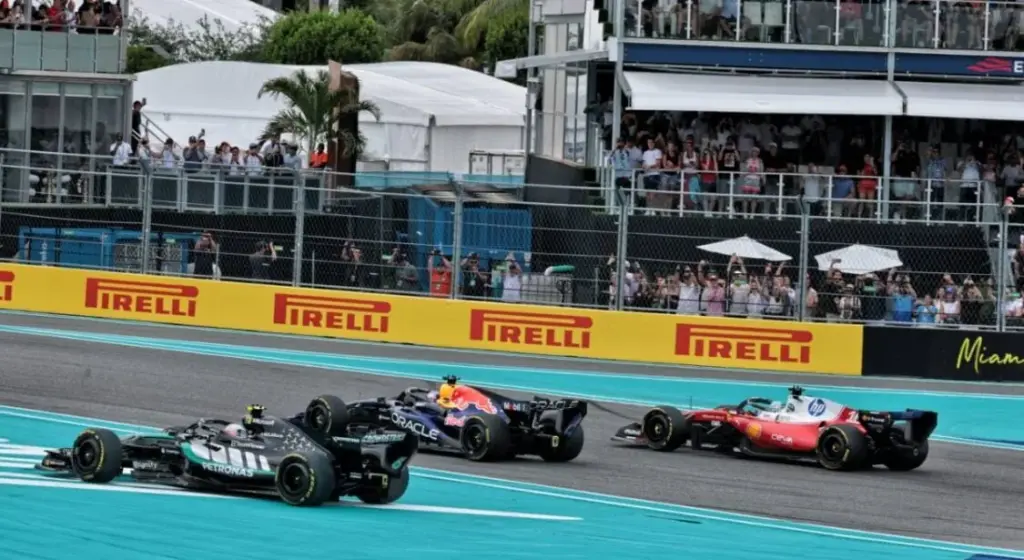
The Formula 1 officials, the FIA, and the teams are meeting to analyze the initial effects of the recent regulatory changes tested in Miami.
Read more Red Bull makes a splash: McLaren intrigued by a «very clever» innovation
The Miami Grand Prix not only offered on-track spectacle: it also served as a real testing ground for the latest developments in the Formula 1 technical regulations. These adjustments, recently introduced, were tested for the first time under real race conditions.
Behind the performances and strategies, the governing bodies are now closely observing the concrete effects of these modifications on the behavior of the cars and the flow of the races.
A decisive meeting between FIA, F1, and teams
According to information reported by RacingNews365, the main paddock players are to meet on Friday for an evaluation meeting. Around the table: representatives from the FIA, Formula 1, the teams, and the engine manufacturers.
The goal is clear: to take stock of the adjustments implemented and determine if further corrections are necessary in the coming months.
Although some points will be discussed in detail, no major overhaul is expected in the short term. The discussions should mainly help consolidate recent choices or identify possible improvements.
Rules adjusted for safety and spectacle
These latest regulatory changes were designed around two main axes: safety and improving on-track spectacle. Several technical parameters were thus modified before the Miami weekend.
Read more The instruction that left Liam Lawson perplexed: an illegitimate and unjustified maneuver?
Among them, the amount of recoverable energy in qualifying was slightly reduced, while some boost effects during the race were toned down to limit artificial performance variations. Other adjustments were also made to the management of electrical power.
On the safety front, the FIA introduced a system to detect overly slow starts, capable of automatically activating engine assistance to avoid dangerous situations. Additional light signals were also added to warn drivers behind.
Intermediate tire blankets were also adjusted in temperature to improve grip during the first laps on track.
A consensus still under construction
While these changes sparked debates in the paddock, some stakeholders believe the direction taken is overall positive. According to several internal feedbacks, the first application in Miami already allowed for a smoother and more natural race.
The upcoming meeting will therefore need to confirm whether this regulatory evolution should be continued as is or further refined for the rest of the season.
Read more Red Bull is preparing a huge move: Oscar Piastri targeted to replace Verstappen