The situation surrounding Lewis Hamilton and his race engineer at Ferrari perfectly illustrates one of the most underestimated challenges in Formula 1: operational stability, before the planned transition.
Read more Otmar Szafnauer wants to relaunch the project for a twelfth F1 team, but in what timeframe?
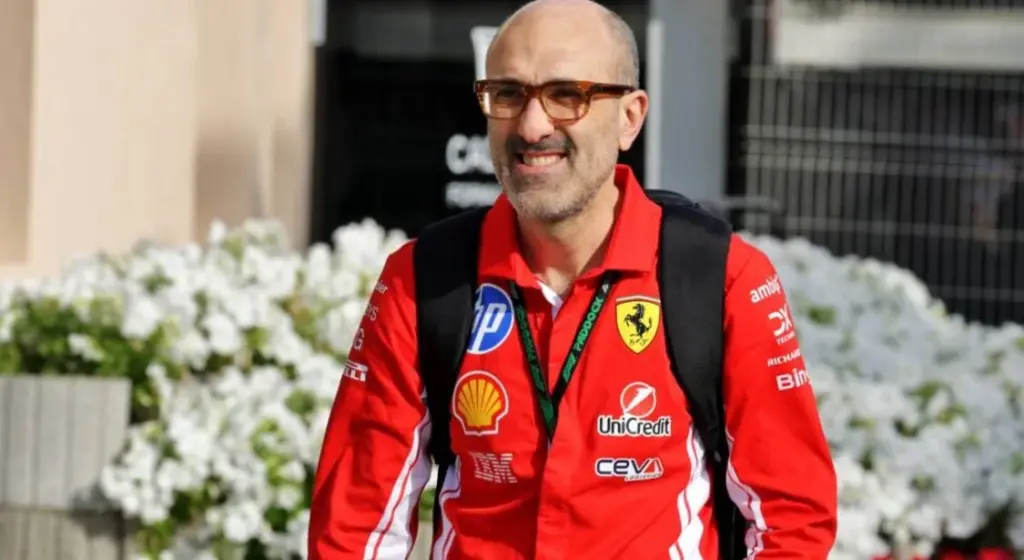
For the Miami Grand Prix in early May, Hamilton will continue to work with engineer Carlo Santi (pictured above), a temporary solution that only half satisfies him.
The Briton was very clear about the potential negative impact of a mid-season change: “It’s a pretty difficult period, because this solution isn’t long-term… in a few races, I’m going to have to adapt to someone new again, and that is penalizing.”
Managing the pressure
He insists on a fundamental point: in a season as demanding as 2026, a driver needs solid reference points, built over several years with the same engineer, in order to create a fine mutual understanding, especially in moments of pressure.
This instability comes, however, in a rather positive context in terms of performance. Hamilton has already secured a podium in China and shown a good level in Australia and Japan, proof that the performance base is there. Ferrari also intends to capitalize on this momentum with a major upgrade package planned for Miami, with the aim of closing the gap with Mercedes, particularly in top speed.
Read more Jos Verstappen reacts to Lambiase’s departure: «Two more seasons together, no split»
Establishing trust
But the real issue goes beyond simple pure performance: it concerns the quality of the driver–engineer dialogue. The role of the race engineer is central, both in the technical understanding of the car and in the cognitive management of the driver on track. Changing interlocutors involves rebuilding reflexes, communication codes, and mutual trust: a process that takes time and can cost tenths, or even results.
Ultimately, it is Cédric Michel-Grosjean who is set to become Hamilton’s permanent race engineer, but the transition does not yet have a precise schedule. This uncertainty adds a layer of complexity in a season where Ferrari is already trying to close a structural performance gap.
Even if the technical upgrades expected in Miami could bring Ferrari closer to the top, the human and organizational management around Lewis Hamilton remains a critical factor. In a Formula 1 where every detail counts, this instability could weigh as much as a few tenths per lap.
Read more Lance Stroll was advised by Max Verstappen to race in GT for a change of scenery