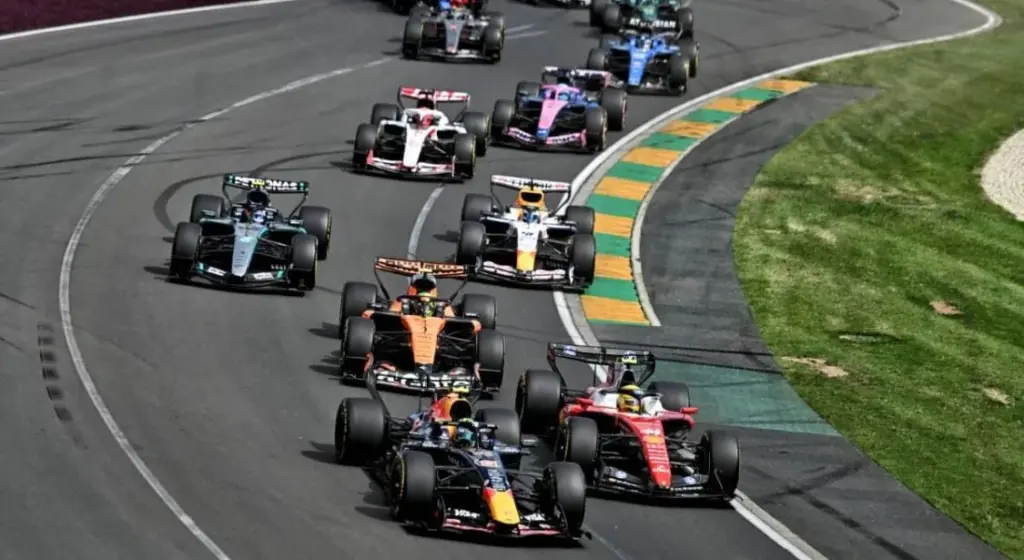
Faced with the first unexpected effects of the 2026 regulations, the FIA is reacting quickly. Several technical adjustments will come into force from Miami to correct the observed deviations.
Read more Loïc Serra: Ferrari continues the parallel development of its SF-26 and SF-27 single-seaters
After only a few races in 2026, the FIA has already deemed it necessary to intervene. Following discussions with the teams, drivers, and engine manufacturers, a set of regulatory modifications has been validated to correct certain undesirable effects observed on track.
These adjustments will be introduced starting from the Miami Grand Prix, even if some measures, particularly those related to starts, will still be tested before definitive adoption. The objective is clear: to make cars more natural to drive and limit artificial behaviors generated by energy constraints.
Energy management at the heart of concerns
One of the main problems identified concerns energy management, especially in qualifying. During the first sessions, drivers were often forced to lift off the throttle to optimize recharging, rather than pushing their single-seater to the limit.
To remedy this, the FIA plans to further reduce recoverable energy per lap. After an initial reduction from 9 MJ to 8 MJ in Japan, a new reduction to 7 MJ is now being considered.
“The idea is to allow drivers to drive more at the limit without constantly having to manage recharging,” explains technical expert Paolo Filisetti. This evolution should limit recovery phases on unusual sections, such as straight lines, and make laps smoother.
Superclipping: towards more natural use
Another key point of the adjustments: the phenomenon of “superclipping,” which strongly influences performance. Until now, this phase involved a significant power loss over several seconds, making driving unnatural.
With the new rules, the maximum recoverable power via this system is increased to 350 kW, compared to 250 kW previously. This harmonization with other recovery modes aims to reduce the interest in lift-and-coast strategies on straight lines.
“The goal is to shorten these phases while making them more intense, to limit their overall impact on the lap,” Filisetti emphasizes.
Expected result: more intuitive driving, where drivers primarily lift off the throttle during braking, and not during full acceleration.
Less artificial overtakes in the race
In the race, the FIA also wants to correct another effect deemed problematic: overly artificial overtakes. Until now, power differences could be so significant that a overtaken driver immediately regained their position afterwards.
Read more F1 driver market: Verstappen ready to unleash total «madness»?
To avoid this phenomenon, the maximum boost has been reduced to 150 kW. The idea is to smooth the power curve to avoid brutal peaks followed by immediate drops.
“We are looking to maintain an advantage for attacking, but without creating overly extreme gaps that break the logic of the race,” it is explained.
This approach should favor more consistent duels and less dependent on temporary performance peaks.
Safety and starts: targeted adjustments
The FIA has also introduced modifications concerning the MGU-K, with a priority objective of safety. While power remains at 350 kW in key phases such as corner exits or overtaking zones, it will be limited to 250 kW on other sections of the circuit.
This measure aims to reduce speed differences between cars and avoid incidents similar to the one observed between Oliver Bearman and Franco Colapinto at Suzuka.
Finally, a new system is being tested for starts. It allows detecting insufficient acceleration after clutch release and automatically activating the MGU-K to prevent a car from remaining too slow on the grid.
“This device acts somewhat like a virtual MGU-H, compensating for the lack of turbo pressure at the start,” Filisetti specifies.
A quick correction rather than a revolution
Despite these adjustments, the FIA is not talking about a regulatory revolution. Deeply modifying the 2026 rules in such a short time would have been unrealistic. The objective is rather to correct technical choices that proved too optimistic or contradictory.
The initial compromise, combining lighter cars, reduced batteries, and significantly increased electric power, is at the origin of the difficulties encountered at the beginning of this season.
It remains to be seen whether these adjustments will bear fruit in real conditions from Miami. The answer will quickly come on track, where the balance between performance, spectacle, and safety will be closely scrutinized.
Read more Adjustments to the 2026 regulations are a first step: permanent evolution