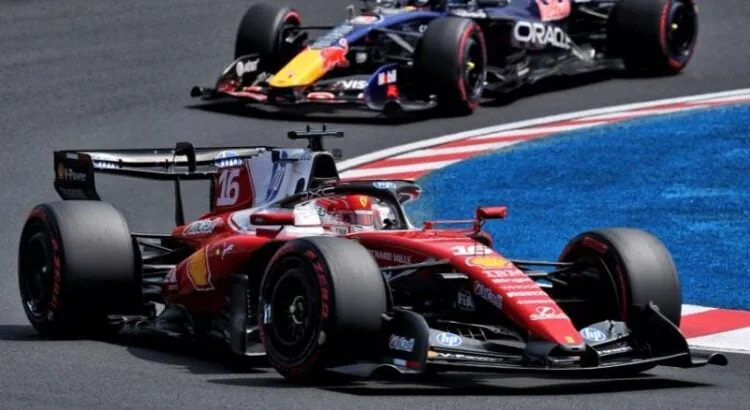
Drivers unanimously denounce the impact of the new regulations on qualifying, now more focused on energy optimization than on driving at the limit.
Read more A Grand Prix in Iran? The improbable story of a circuit near Tehran
Faced with the driving difficulties encountered by this complex regulation, the champions are forced to test solutions in real time to adapt to energy management.
This trend varies depending on the circuits, and the first three races of the season – held on tracks particularly demanding in terms of energy – have accentuated this phenomenon.
The same observation
But ideally, qualifying should remain a pure exercise aimed at determining who is capable of exploiting their car to the maximum.
Regulatory adjustments are expected, particularly regarding energy storage and distribution, following discussions between the teams, Formula 1, and the FIA during this unforeseen break in the calendar.
In this context, two case studies stand out: those of Charles Leclerc and Max Verstappen. Neither driver appreciates this new style of driving based on energy efficiency. However, Leclerc’s Ferrari has generally proven more competitive than Verstappen’s Red Bull Racing since the start of the season.
Read more Andrea Stella at Ferrari? The «fake news» of the week: why we shouldn’t get carried away
Two different approaches
But it is especially in their approach that the difference is notable. Verstappen has openly expressed his frustration with these rules, a dissatisfaction amplified by the current limits of his car’s front end. Conversely, Leclerc has chosen to adapt, even identifying opportunities within this new framework to compensate for the imposed disadvantages.
Two opposing philosophies facing the same constraint: where Verstappen contests, Leclerc adjusts — perfectly illustrating the technical and mental challenges posed by this new regulatory era.
The fact remains that the drivers’ voices are hardly listened to by the authorities, even though they are on the front line of these regulatory experiments. A trend is emerging among them to make themselves heard.
A WhatsApp group on fire!
“The chat between the drivers has never been as active as during this break, says Alex Wurz, the president of the GPDA. I created this WhatsApp group in 2015 or 2016. It is boiling with emotions and suggests possible solutions. All stakeholders must be convinced to take the drivers’ opinions into account.”
Opinions that may be nuanced depending on the competitiveness of their car, even if a relative unanimity is emerging to resolve the problems encountered in qualifying regarding energy deployment, including between two heavyweights of the championship like Leclerc and Verstappen.
Read more Williams poaches from Mercedes AMG: James Vowles’ network in action