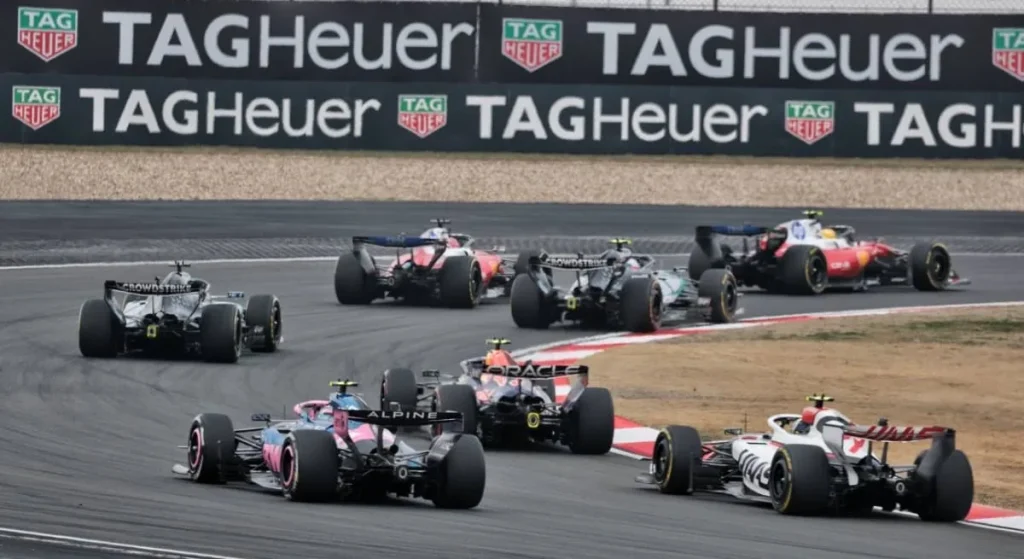
Formula 1 does not plan to make immediate changes to its 2026 technical regulations: discussions regarding potential adjustments have been postponed until at least the Miami Grand Prix in early May, following initial analyses carried out by the FIA.
Read more Liam Lawson seventh again: a great haul of points in China
Even before the start of the season, the FIA and the sport’s leaders had planned a meeting with team principals after the Shanghai event to conduct an initial assessment of the new regulations.
This initiative followed concerns that emerged during winter testing, with some fearing that the 2026 cars would be too energy-limited and offer a disappointing spectacle.
No need to panic
While the first races of the season, in Australia and then China, fueled these debates, the Shanghai weekend ultimately provided a more reassuring outlook. In the paddock, the consensus is now that certain aspects deserve improvement — notably the qualifying spectacle or certain elements deemed too complex — but that the situation does not justify rushed changes.
Three factors explain this more cautious approach. First, the races held in China, both the Sprint and the Grand Prix, were judged to be entertaining, far from the catastrophe scenario feared before the season.
Second, the differences between circuits play an important role: Melbourne’s Albert Park is one of the most demanding tracks in terms of energy management, which strongly influenced the performance of the new cars during the season opener. Finally, the next round in Japan, at the Suzuka circuit, will offer an additional point of comparison to better evaluate the behavior of the 2026 F1 cars.
Read more Alex Palou (Ganassi) beaten on merit by Kyle Kirkwood (Andretti) at Arlington
A welcome time for reflection
The cancellation of the Bahrain and Saudi Arabian Grands Prix also created an unexpected break in the calendar, offering more time to analyze data and reflect on potential improvements. A meeting of team principals will indeed take place this week, but attention is expected to focus primarily on a technical working group bringing together team officials after the Japanese Grand Prix.
This schedule would allow enough time to identify potential corrections and validate them before the championship resumes in Miami. In the paddock, many believe it is better to take the time to develop coherent solutions rather than modifying the regulations in haste.
Drivers divided
While Max Verstappen remains one of the most vocal critics of these new rules, some drivers have already nuanced their positions after testing them in racing conditions. This is notably the case for Lewis Hamilton, who was initially very skeptical of the complexity of the regulations.
“The F1 cars are easier to follow, much better than in past years. You can get very close. There is no bad wake where you lose too much downforce. I think these are the best on-track battles I have ever experienced in Formula 1,” the Briton believes.
The seven-time world champion also highlights the quality of the duels observed since the start of the season: “It felt like I was karting. We were overtaking, re-overtaking, and you could really place the car with precision. At times, there was only the thickness of a sheet of paper between us, but we didn’t touch. It shows the quality of the drivers and mutual respect.”
Read more Max Verstappen makes an alarming assessment of the Red Bull