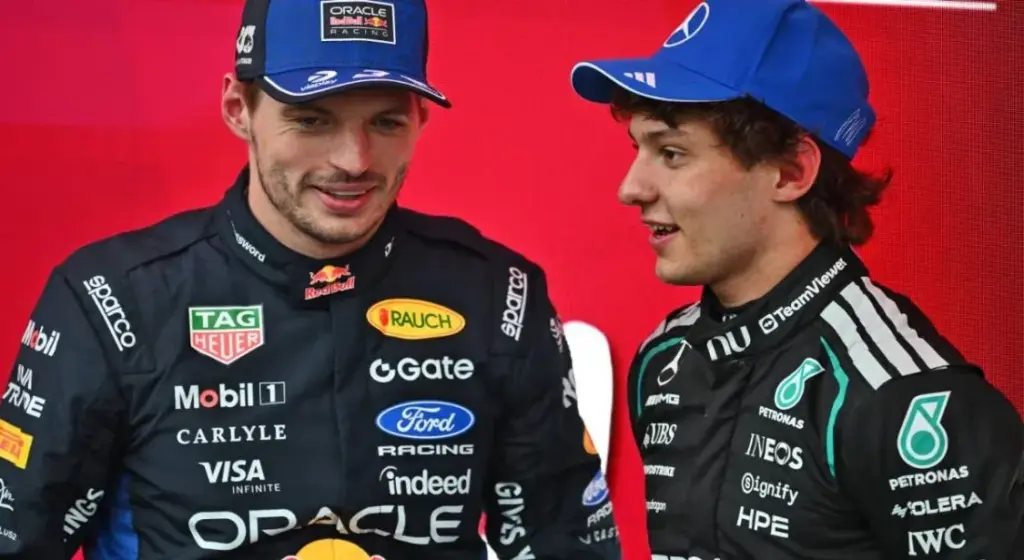
Franz Tost explains why the new 2026 F1 rules reduce the advantage of the most talented drivers, including Max Verstappen.
Read more Lance Stroll reveals the shocking schedule of Aston Martin upgrades
The new technical regulations of Formula 1, which came into effect this season, continue to spark debate in the paddock. For Franz Tost, former F1 team principal and mentor to Max Verstappen at Toro Rosso, these rules even have an unexpected effect: they penalize the most complete drivers on the grid.
At the heart of this overhaul is a new distribution of the power of the cars, shared equally between internal combustion engine and electric energy. A major change that, according to several observers, profoundly changes the driving style.
A less “pure” driving style according to Tost
Max Verstappen has never hidden his skepticism towards this evolution, being known for his aggressiveness under braking and his ability to exploit the limits of the cars on corner entry. But for Franz Tost, the problem is structural.
According to him, the best drivers lose part of their natural advantage, because the new regulations impose a much more conservative approach.
“With the current rules, you no longer brake at the last moment” explained Tost in the podcast 15 Love – der Business Podcast.
He describes a clear difference with the old driving philosophy: instead of delaying braking to the maximum, drivers now have to lift off earlier to manage the recovery of electric energy.
Energy management that changes everything
This constraint directly changes the way corners are approached. Where a driver could previously attack the braking point to the limit, he must now adopt a more progressive approach to optimize the use of energy on the following straight.
Read more Max Verstappen arrives in Monaco with a finally clean «F1 record» after his moment of madness
“You lift off 20 to 30 meters earlier and carry speed through the corner to save energy” detailed Tost.
This change partly erases the traditional differences between drivers, especially in phases where Verstappen, Lando Norris, Oscar Piastri or Fernando Alonso made the difference thanks to their precision under braking and their speed on corner entry.
A reduced natural advantage for the best
For Franz Tost, this new regulatory framework therefore reduces the impact of the qualities that make the strength of the best drivers on the grid. Less late braking, less aggressiveness on corner entry, and more energy management.
Result: according to him, the gaps between drivers could be artificially tightened in certain phases of pure performance.
The FIA has already made some changes since the start of the season, especially after the first races, to mitigate the most criticized effects of the regulations.
Other adjustments could follow, even if discussions remain complex in a tense political context between teams, especially with a still unstable performance hierarchy at the start of this regulatory cycle.
For Tost, the debate is far from over, and the season could still see the rules evolve to find a better balance between spectacle, technology, and driver performance.
Read more The FIA quietly abandons a rule of the Monaco GP, but why?