A key technical meeting is scheduled for this Thursday in London to discuss possible adjustments to the energy deployment rules to improve the show and restore the authenticity of driving.
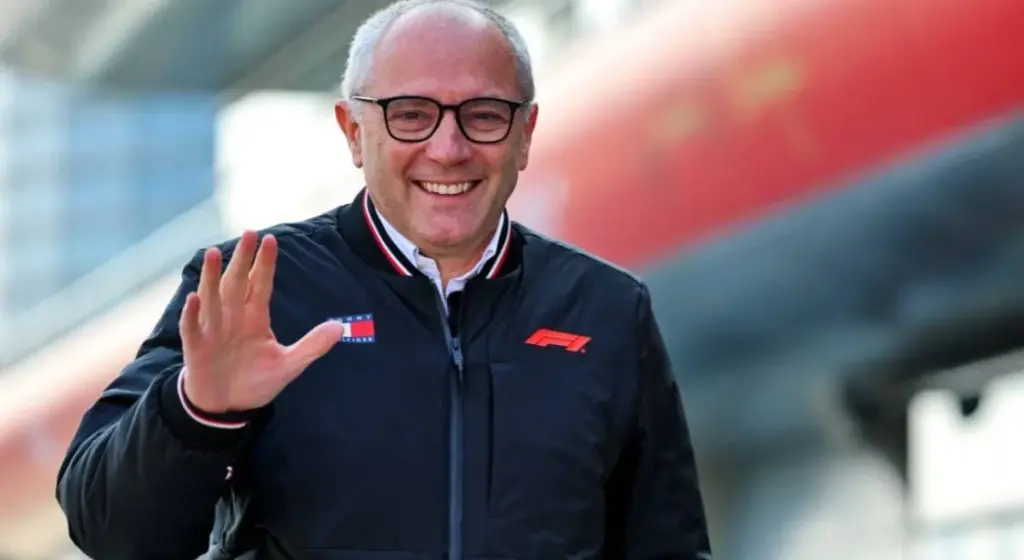
Formula 1 CEO Stefano Domenicali (pictured above) has convened the members of the F1 Commission this Thursday, which includes representatives from the teams and engine manufacturers as well as the FIA, to reflect on the famous adjustments planned to adapt the new regulations.
At the root of this meeting is a near-universal dissatisfaction among drivers – supported by some fans – regarding the impact of the new 2026 power units on qualifying.
Growing rejection of the 2026 rules
What was supposed to be a pure exercise in performance has become a discipline dominated by energy management, complex algorithms, and counter-intuitive compromises.
Today, pushing in fast corners penalizes drivers by reducing the energy available on the following straights. As a result, we see cars lifting off in the middle of qualifying, or approaching certain corners below their potential to recharge the battery.
This somewhat surreal situation takes the edge off the qualifying exercise, synonymous with intrinsic performance without voluntary speed limitation and now emptied of its substance by regulatory deviations, a finding that is fortunately unanimous and should lead to short-term changes.
Possible solutions
Discussions will focus primarily on adjustments aimed at restoring the importance of driving, namely reducing the electrical share, modifying battery charging rules, and the global rebalancing of energy use.
Read more Laurent Mekies: Red Bull Racing will adopt «attack» mode to regain its rank
This meeting is only the first step in a process. Another is scheduled for April 20, including teams and F1 leaders, before an electronic vote. Any modifications could be tested as early as the Miami Grand Prix, then evaluated over several races before being validated for good.
However, expectations must be tempered: no major modifications will be possible in the short term. Technical constraints and investments already made prevent any deep overhaul of the power units. The planned adjustments will therefore remain software-based or regulatory.
More structural developments – particularly on the balance between human and machine – will have to wait at least until the off-season to be introduced in 2027.
Safety returns to the center of the debate
The safety issue resurfaced after Oliver Bearman’s violent accident at Suzuka, involving a significant speed differential with Franco Colapinto. Already ahead of the season, Andrea Stella, McLaren team principal, had warned about the high closing speeds generated by these rules.
In this context, the FIA could intervene directly if no consensus emerges, although a global agreement seems feasible for now.
Read more The Nürburgring will return to Formula 1 to replace the Bahrain tests