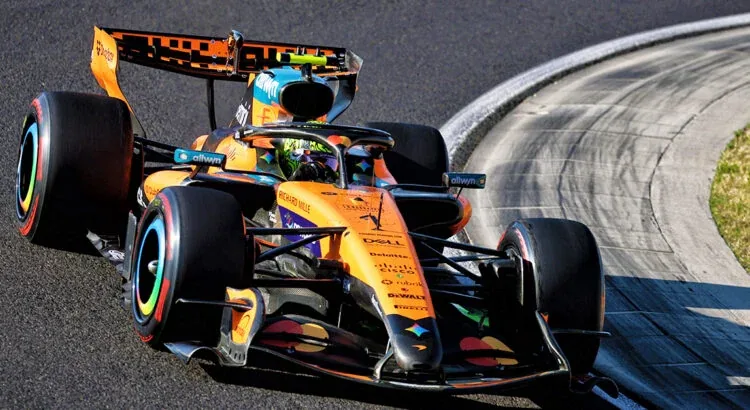
Lando Norris secured pole position for the Hungarian Grand Prix. While this result alone does not validate the developments introduced by McLaren, it comes at the precise moment when the team hoped to see the first effects of its new aerodynamic direction.
Read more Martin Brundle delivers a first verdict on the new Aston Martin
Pole position alone never proves the effectiveness of a new aerodynamic package. But the timing is hard to ignore.
By setting the fastest time in qualifying for the Hungarian Grand Prix, Lando Norris gave McLaren a first significant reward, just hours after already dominating Free Practice 3.
This result comes as the team introduced in Budapest a set of developments spread across several areas of the MCL40, corresponding to the first parts resulting from the new development direction mentioned in recent weeks by Andrea Stella.
Understand Before Accelerating
This approach corresponds to the method followed by McLaren since the start of the season.
In its previous developments, the team gave unusual importance to flow conditioning, i.e., the quality, orientation, and stability of flows. Rather than focusing its efforts on a single area, it worked on the interactions between the different parts of the car.
Andrea Stella recently provided a clear insight:
“We now have a much clearer idea of the direction to take in terms of aerodynamic development.”
Read more Lando Norris snatches pole from Hamilton in a thrilling finish in Hungary
The McLaren director had also explained that it took several months to translate this new direction into visible parts on the car. The Budapest package can therefore be considered one of the first concrete results of this work.
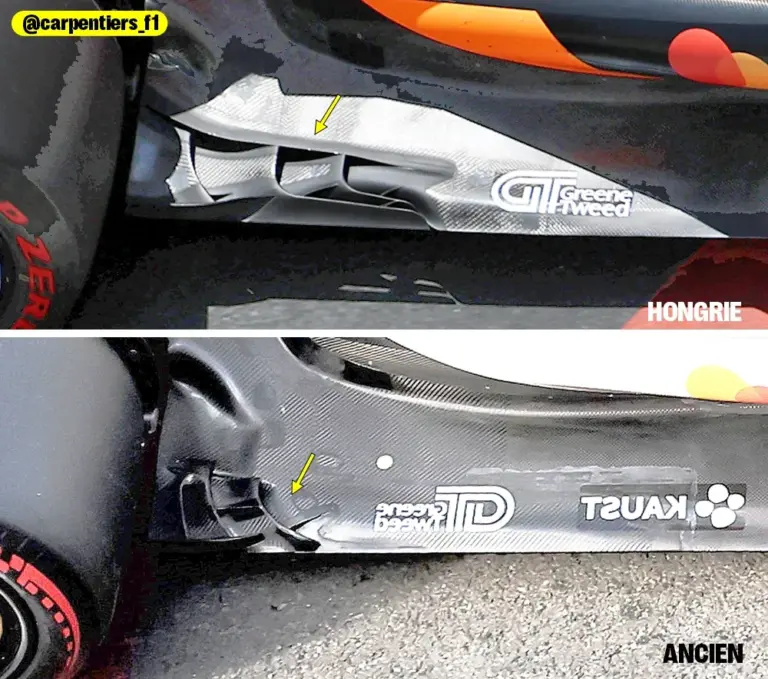
An Inspiration from Mercedes
The most visually interesting modification is located in front of the rear wheel. McLaren has revised the arrangement of the winglets there to more effectively increase local aerodynamic load.
The new architecture recalls certain solutions already used by Mercedes. It is not necessarily a direct copy, but this convergence clearly illustrates the approach described by Stella: observe, understand the most promising directions, then adapt them to one’s own car.
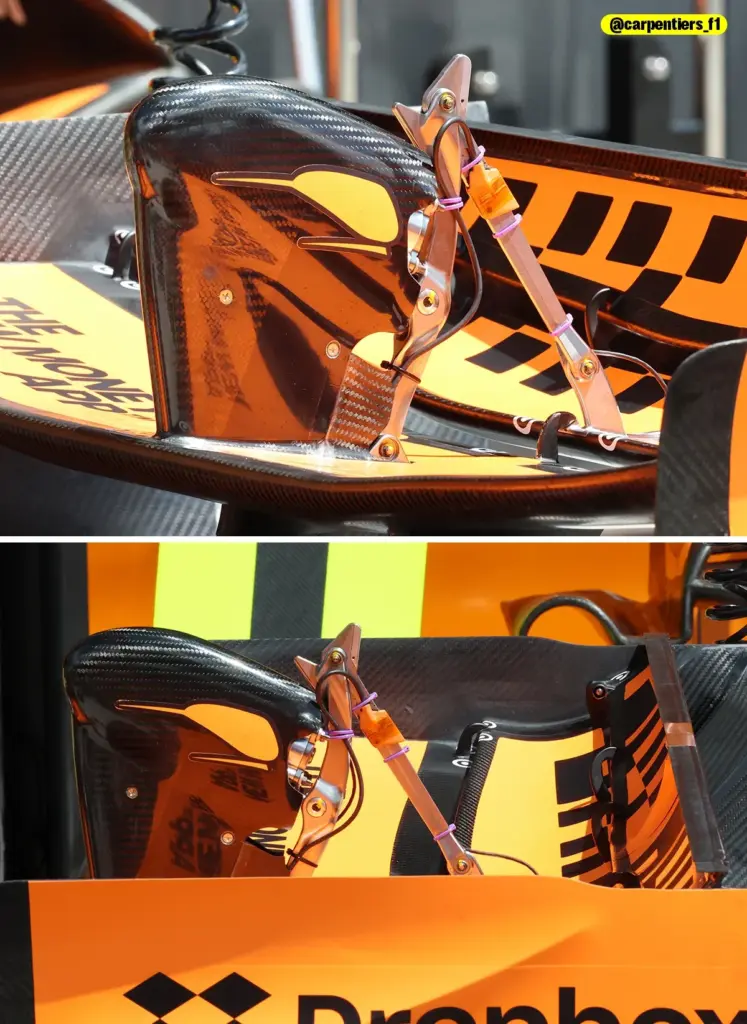
While testing its version of the “Macarena” rear wing, McLaren also introduced a new floor and new appendages, as well as a slight modification to the rear wing endplate. The whole aims less at an isolated gain than at an improvement in the overall aerodynamic consistency of the single-seater.
Norris’s pole position obviously does not allow credit to be attributed solely to the developments introduced this weekend. Settings, track conditions, and the work done over several races also play a role.
However, this result comes exactly at the moment when McLaren hoped to see the first parts resulting from its new development philosophy. It’s hard to imagine a better start to this new chapter.
Read more Lando Norris strikes hard in FP3 before qualifying, Ferrari joined by McLaren and Mercedes