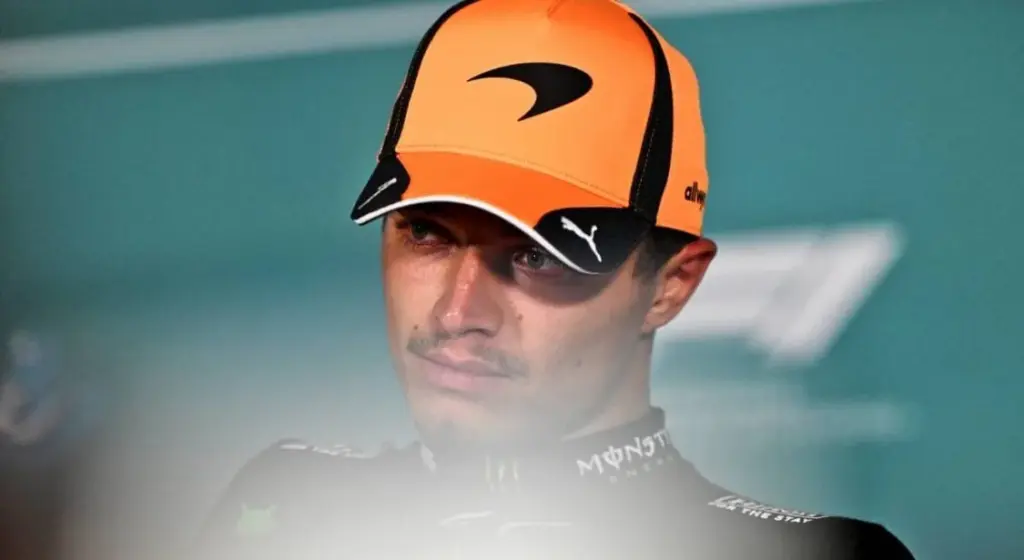
Still critical of the 2026 version of F1, Lando Norris believes the adjustments are not enough. For him, a radical solution is necessary.
Read more Apple TV accelerates in F1 and aims for global expansion: Canal+ under pressure?
Despite the adjustments introduced before the Miami Grand Prix, Lando Norris remains very skeptical about the evolution of the 2026 cars. The Brit acknowledges slight progress… but far from expectations.
“It’s a small step in the right direction, but it’s not yet at the level where Formula 1 should be” he explains.
The main criticism concerns the behavior of the cars, which penalizes drivers when they try to fully attack. A philosophy considered contrary to the very DNA of the discipline.
An F1 that penalizes attacking?
For Norris, the problem is simple: pushing flat out is no longer rewarded as before. A situation he finds hardly acceptable at this level of competition.
“If you attack flat out everywhere like before, you are penalized, he laments. You can no longer be flat out all the time.”
The driver notably points to an overly restrictive energy management, which forces lifting off at certain key moments.
“You should never be penalized for things like this, yet it’s still the case today” he insists.
Read more The chilling testimony of Frederik Vesti, trapped in the war last March in Sakhir
The “yo-yo” effect still present
In races, these constraints result in a well-known phenomenon this season: the “yo-yo” effect. A driver who overtakes can quickly become vulnerable, lacking available energy to defend their position.
This scenario was again observed in Miami, increasing the frustration of several drivers. The spectacle suffers, with overtakes sometimes artificial and difficult to sustain.
At McLaren, pure performance improvements are noted, but these regulatory limits continue to hinder the maximum exploitation of the cars.
A proposed radical solution
Faced with this observation, Norris sees no intermediate solution. For him, deeply correcting these flaws would require a much more radical change.
“Honestly, I don’t think you can really fix this, he states. You just have to remove the battery.”
This stance reignites an already heated debate in the paddock. Between pure performance, spectacle, and technological transition, Formula 1 is still seeking its balance.
Norris has chosen his side: that of a simpler, more direct F1… and above all more focused on driving. It remains to be seen if this vision will be heard in the coming years, or if the discipline will continue on the current path.
Read more Honda revives Aston Martin: a new milestone after a key breakthrough