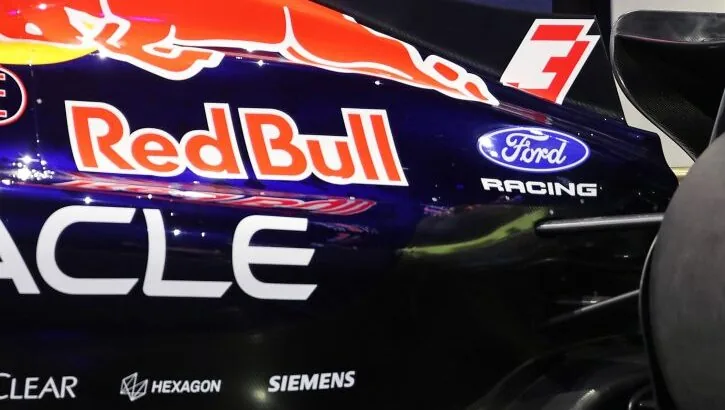
While Formula 1 is already thinking about its next engine regulations, Ford says it is ready to support a return of V8s, while remaining open to different hybrid configurations for the future.
Read more One more Sprint, but a first for Montreal: with what prospects?
While the current power unit cycle has just come into effect, debates about the next generation of engines in Formula 1 are already underway.
The FIA is notably considering a potential return to V8 engines running on sustainable fuels from the next major regulatory change, possibly around 2030.
In this context, Ford shows an open position, without locking itself into a single technological direction.
Ford attracted by the idea of a V8 comeback
The American manufacturer, partner of Red Bull Racing through its involvement in the future power unit, does not close the door to a return to a V8 architecture.
Mark Rushbrook, head of Ford Performance, explains that the brand sees technological and industrial interest in this direction, notably linked to its own road engines.
Ford still produces many V8 engines in certain markets, which makes this configuration particularly relevant from a commercial and technical point of view.
Read more David Coulthard insists on the importance of Kimi Antonelli’s coaching
An openness to multiple hybrid architectures
Beyond the V8, Ford mainly emphasizes its desire to maintain technological diversity in Formula 1.
The manufacturer highlights that it is already working on different types of powertrains in the automotive industry, ranging from pure combustion to full electrification, including several levels of hybridization.
This diversity would, according to them, better connect F1 to the technologies used on production vehicles.
A flexible vision for the future of F1
For Ford, the important thing is not only the type of engine, but the overall balance between performance, innovation, and industrial relevance.
Whether it is a 50-50, 60-40, or other split between combustion and electric, the brand says it is ready to adapt.
This position confirms that manufacturers are already preparing for the post-2026 cycle, even though the new regulations have not yet fully shown their effects on track.
Read more Mick Schumacher facing a monument: a huge challenge awaits him in Indianapolis