Ferrari launches an original aerodynamic solution, Haas adopts it in Shanghai
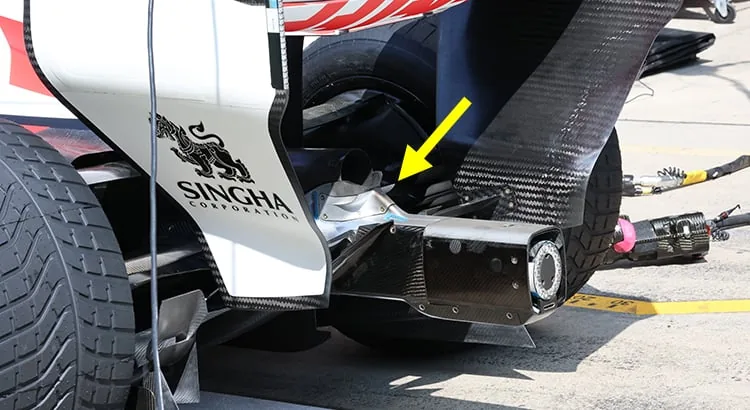
The Haas team introduced a version of the wing installed behind the exhaust outlet this weekend at the Chinese Grand Prix, a solution first seen on the Ferrari SF-26 during pre-season testing in Bahrain.
Read more Pierre Gasly best of the rest: Alpine ahead of Red Bull in Shanghai!
This small wing exploits the exhaust gas flow to provide a downforce gain in this area of the car, as we explain in the image here.
As seen in the image below, this element, positioned at the top of the rear crash structure to capture this flow, primarily aims to improve the quality of the airflow leaving the diffuser, which is disturbed by hot and turbulent gases.
The wing is connected to the walls that extend the diffuser and surround the rear structure of the car, where the rain light is also located.
A shared architecture with Ferrari
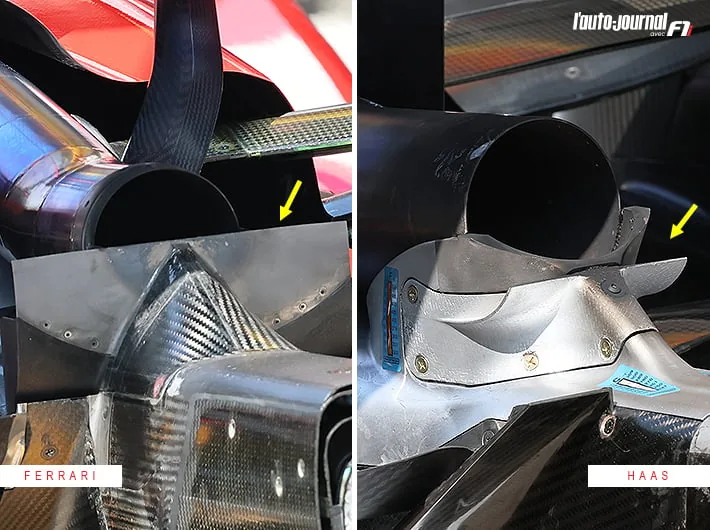
Ferrari was able to introduce this element thanks to certain design decisions regarding the position of the gearbox and the rear crash structure. This configuration opens up a regulatory zone allowing for the installation of this wing.
Other teams do not have this freedom due to different technical choices in the layout of these components.
Read more Haas: Oliver Bearman in the mix, Esteban Ocon hard at work but not worried
The team of Esteban Ocon and Ollie Bearman, which uses the Ferrari gearbox as well as several other components supplied by the Italian team, benefits on the other hand from a similar architecture. The American team has thus introduced its own version of this exhaust wing for the Shanghai weekend.
The Haas version, however, appears less aggressive in the way it captures the airflow than the one used by Ferrari, its design having been adapted to the characteristics of the car’s diffuser.
Ferrari continues its developments
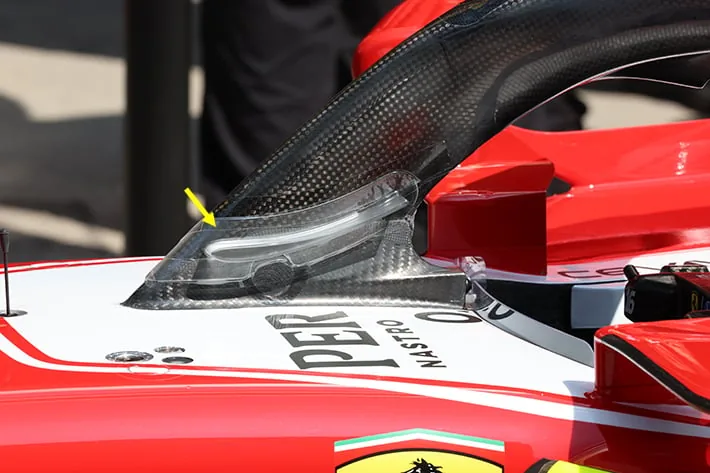
Ferrari did not stop at this solution for the Chinese Grand Prix. The SF-26 was also seen with two small wings installed on the central pillar of the halo, intended to optimize the airflow around the cockpit.
In the document submitted to the FIA, Ferrari indicates that these winglets provide “a slight benefit in terms of aerodynamic load.”
Audi also brought an aerodynamic evolution to Shanghai with a new front wing endplate and a new nose.
Read more George Russell on pole: the complete starting grid for the Chinese Grand Prix sprint