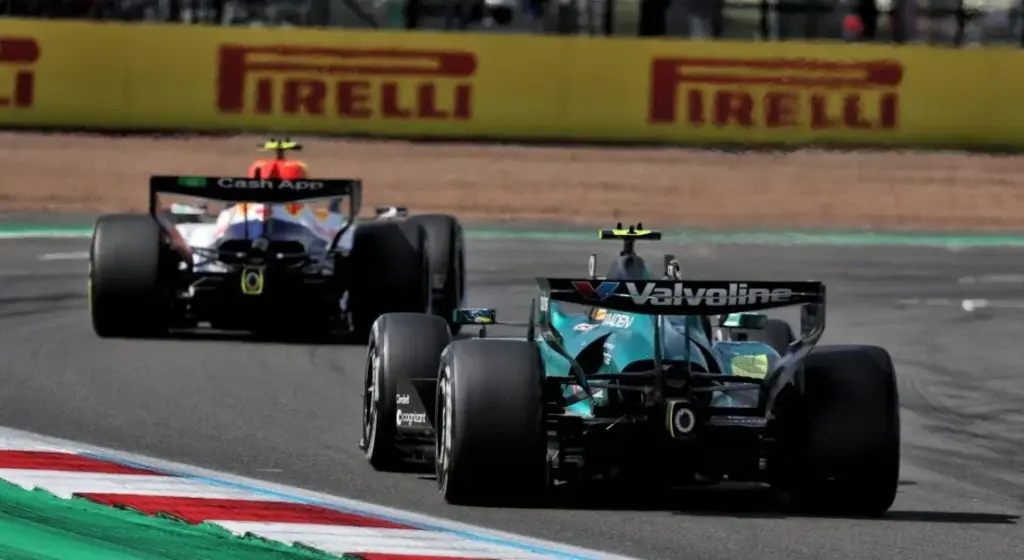
In the midst of preparing a major upgrade package for the Hungarian Grand Prix, Aston Martin has found a rather original comparison to explain the constraints of the budget cap in Formula 1.
Read more Mattia Binotto asks the FIA to review the engine development system
After a particularly difficult start to the season, Aston Martin is finally ready to introduce a significant upgrade to its AMR26 at the Hungarian Grand Prix.
So far, the Silverstone team has not brought any real technical updates to its car, preferring to focus its resources on a more substantial package.
But in modern Formula 1, developing a car no longer depends solely on technical capabilities.
With a budget cap set at 215 million dollars (about 160 million pounds sterling) for the 2026 season, every investment must be carefully calculated.
Mike Krack’s surprising comparison
To illustrate this reality, Mike Krack used a metaphor that is quite unexpected: that of supermarket shopping.
“You go to the supermarket with 100 euros in your pocket. So you can only spend those 100 euros.”
According to the Aston Martin boss, every upgrade must be included within this limited envelope.
“If you get something for free, it still counts within those 100 euros. You develop your car, but once the 100 euros are spent, you can’t buy anything else.”
Keeping a reserve for unforeseen events
Krack also reminds that a team can never dedicate its entire budget solely to development.
Accidents represent a significant cost and force teams to keep a financial margin.
Read more Max Verstappen discusses the crucial importance of Red Bull’s developments for his future
“You must not forget that accidents can happen. So you have to keep a reserve and spend those 100 euros wisely.”
For this reason, Aston Martin is also looking to reduce the manufacturing cost of its new parts.
“We have many new people working to improve our processes so that parts cost less. The goal is to get much more with the same 100 euros.”
A new strategic dimension
For Mike Krack, this financial management is now an integral part of the competition.
Rather than questioning the regulations, he believes that teams simply have to learn to make the best use of them.
“I don’t want to debate whether it’s a good or a bad rule. It’s the regulation, just like the car’s weight or the number of engine cylinders.”
“In Formula 1, you have to be efficient in how you manufacture parts and manage the entire project.”
Beyond the technical and sporting challenges, teams now have to face a third challenge: financial optimization.
“You no longer just have to meet a technical or sporting challenge, but also a financial one. And that is now part of Formula 1.”
Read more Charles Leclerc angry at Ferrari: «No, I didn’t play the fool!»