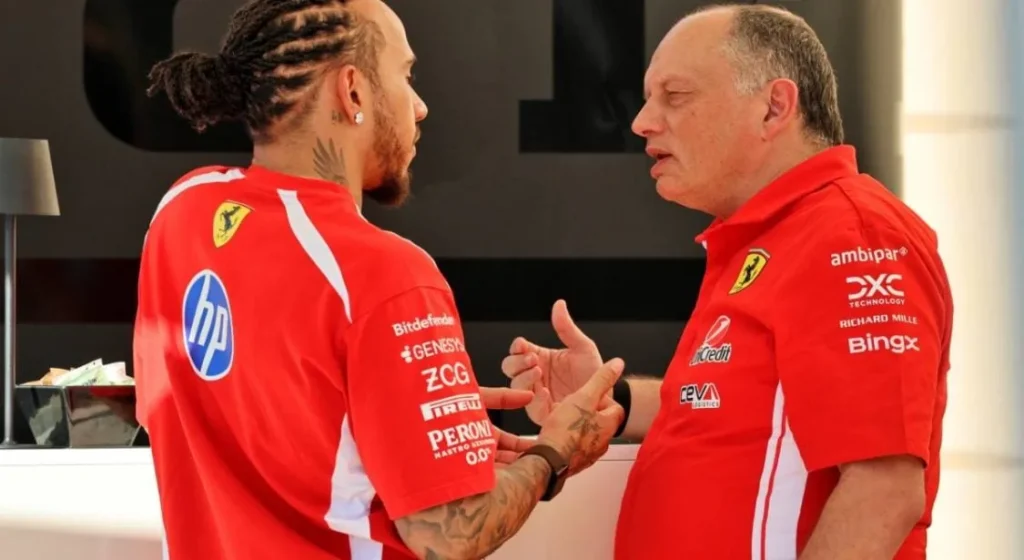
After a catastrophic 2025 season, Ferrari approaches 2026 with heavy expectations. Juan Pablo Montoya warns the Scuderia against an impulsive reaction if the results do not follow.
Read more Hamilton called Wolff and Brown after the Bahrain tests
Scuderia Ferrari begins a new technical era after going through an extremely disappointing 2025 campaign. For the first time in a long while, the Maranello team finished a regulatory cycle without a single victory, concluding the year in a distant fourth place in the constructors’ championship.
Among the four major teams on the grid, Ferrari was the only one not to win. A brutal observation that has revived questions about management and, in particular, about Frédéric Vasseur. The Frenchman is preparing to start his fourth season at the head of the team, with the clear obligation to turn things around.
The arrival of new power units offers an opportunity to start on healthier foundations. The first feedback from winter testing is encouraging, with the SF-26 appearing competitive as the Australian Grand Prix approaches. But if 2026 were to fall short, pressure could quickly intensify.
Montoya points out Ferrari’s “biggest problem”
Interviewed by Vision4Sport, Juan Pablo Montoya did not mince his words. For him, Ferrari’s main flaw lies in its historical tendency to change leaders as soon as objectives are not met.
“The question is: if it doesn’t work, is it really his fault?” he wonders about Vasseur. Before continuing: “I think that’s Ferrari’s biggest problem; every time something doesn’t work, they get rid of the boss.”
The Colombian believes that this chronic instability prevents any long-term construction: “You have to be able to build, and you have to remove this fear at Ferrari and get rid of those who have this mentality.”
For him, the team must prioritize continuity rather than emotional reaction.
“Build instead of destroy”
Montoya insists on the need for a structured vision: “They must build instead of destroy. Either you have the right people to design the best car, or you don’t.” In the latter case, the priority should be to identify the necessary talents and create a solid foundation.
He strongly criticizes the approach of designating a single culprit: “You can’t say: ‘The car is rubbish, you’re fired, we’re getting someone else.’” According to him, this strategy only fuels a vicious circle where each new manager further weakens the structure.
Montoya compares the situation to that of teams like McLaren and Mercedes, which he considers more stable: “They are very solid. They win together and they lose together. You don’t see a search for a culprit.”
Conversely, he describes an Italian culture that is sometimes too passionate: “Italians are so fiery and influenced by the media that it’s as if someone’s head is being demanded on a platter!”
At the dawn of a pivotal season, Ferrari will have to choose between strategic patience and the temptation of radical change. Vasseur’s fate could well symbolize this decision.