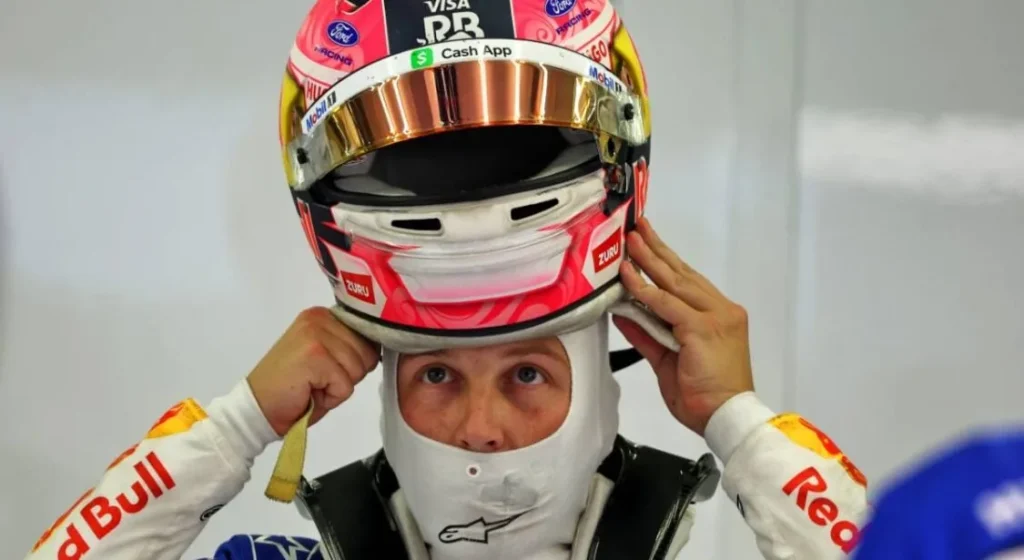
At the dawn of a new technical era in Formula 1, Liam Lawson expects a particularly demanding season. The New Zealand driver is already pointing to a key element that could make the difference.
Read more Charles Leclerc officializes his marriage in a moving message
As the Australian Grand Prix approaches, Liam Lawson begins his second full campaign in Formula 1 with the Racing Bulls team. A relief for the New Zealander, retained by the Italian structure after a turbulent and sometimes delicate 2025 season.
Propelled into Red Bull at the start of last year, Lawson had only competed in two Grands Prix alongside Max Verstappen before being demoted. A quick decision that forced him to rebuild himself mentally and technically. It took him time to find his bearings, but his performances in the second half of the season convinced his leaders to give him another chance.
This newfound stability, however, comes in a completely unprecedented context for the entire grid.
An engine revolution that changes everything
The 2026 F1 season marks a major turning point for the sport. The new power units now rely on an unprecedented balance: 50% thermal energy and 50% electrical energy, all combined with the use of 100% sustainable fuels. A profound change that disrupts drivers’ habits.
During winter testing held at the Sakhir circuit, many questions emerged. Electrical energy management proved particularly complex, whether in qualifying or in the race. Drivers quickly understood that battery control would be decisive.
Lawson does not hide that this aspect represents his main challenge today: “Battery management is clearly the most difficult element to understand.”
He specifies that the car’s behavior differs radically from last year’s: “It’s very different from last year, much more sensitive, especially when it comes to preparing the battery for a fast lap and managing it over a longer stint.”
Read more Aston Martin in «serious trouble» before Melbourne: maximum alert on the Honda engine
Added to this is a significant reduction in aerodynamic downforce, making the cars more unstable and less forgiving: “The cars have significantly less downforce, which makes them more complicated to drive and generally less tolerant.”
Bearings still blurred before Melbourne
Although teams were informed early of the new rules, concrete adaptation remains an ongoing process. Lawson explains that work began as soon as the changes were announced: “We learned about the new regulations at the beginning of last year and we started preparing immediately.”
Thus, when he took the wheel of the new car for the first time, he already had a solid theoretical basis: “I knew what to expect and what the main differences between the 2025 and 2026 cars would be.”
Pourtant, la pratique réserve toujours son lot d’imprévus : “Some things were not a surprise, but once in the car, you are still learning to optimize every detail.”
Under these conditions, setting precise goals for the start of the season is almost impossible. Hierarchies remain blurred and no one really knows their performance level.
Lawson remains lucid: “It is still difficult to say where we stand, because we don’t have a clear picture of our real pace.” His ambition, however, remains intact: “Of course, the goal is to score points, but personally, I especially want to get the most out of myself and deliver the best possible performance every time I’m on track.”
A pragmatic approach in a season where adaptation could be worth more than pure speed.
Read more Isack Hadjar reveals the Red Bull asset that facilitated his promotion