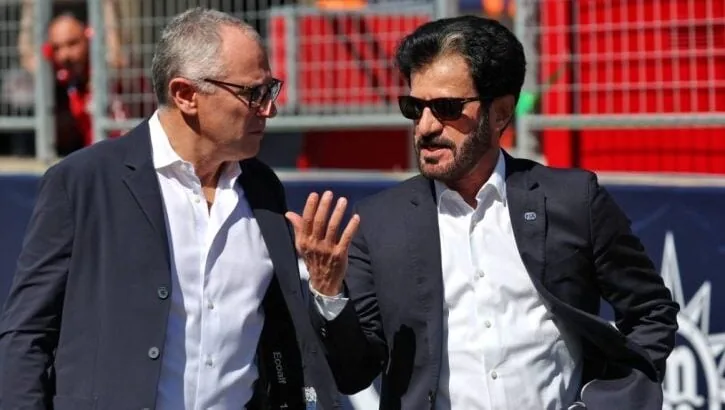
Mohammed Ben Sulayem envisions a significant return of V8 engines in F1, aiming to reintroduce the sound of the old single-seaters while simplifying current technology.
Read more Franco Colapinto dominated Pierre Gasly to achieve his best F1 weekend in Miami
The president of the Fédération Internationale de l’Automobile believes that the current hybrid V6s, although designed to stay close to series technologies, have become too complex and too heavy.
In his view, the V8 now represents the best compromise for the future: lighter, simpler, and above all capable of giving the discipline a strong sonic identity again.
As early as 2030?
Unlike the V10s, which he now considers unsuitable for the modern automotive industry, the V8 remains widely used by many manufacturers such as Ferrari, Mercedes-Benz, Audi, or Cadillac, which reinforces its relevance in a Formula 1 that wants to maintain a link with the road.
In this vision, electrification would be greatly reduced, with a much more limited role for hybrid systems, in favor of a dominant thermal engine powered by sustainable fuels. This change would mark a significant break with the current philosophy, based on a complex balance between electric and thermal energy.
Read more Max Verstappen in survival mode in Miami: spin, jokes… and a big comeback
Moreover, this project also fits into a political context, as the FIA must regain full control over technical regulations from 2031. Ben Sulayem nevertheless wants to accelerate this schedule and introduce these new engines as early as 2030, even if there is reluctance from engine manufacturers. Convinced that the trend is inevitable, he states that F1 must evolve towards lighter, simpler, and more spectacular cars.
Simplify and improve
Beyond technical and regulatory considerations, this direction also responds to a strong expectation from fans, often critical of the lack of noise, complexity, and weight of current single-seaters.
By betting on modern V8s combined with sustainable fuels, the FIA thus seeks to reconcile emotion, performance, and environmental responsibility. If this project materializes, the discipline could regain part of its historical DNA as early as the next decade, with cars that are more expressive, more accessible, and potentially more spectacular on track.
Read more Lewis Hamilton powerless in Miami: a race ruined from the start