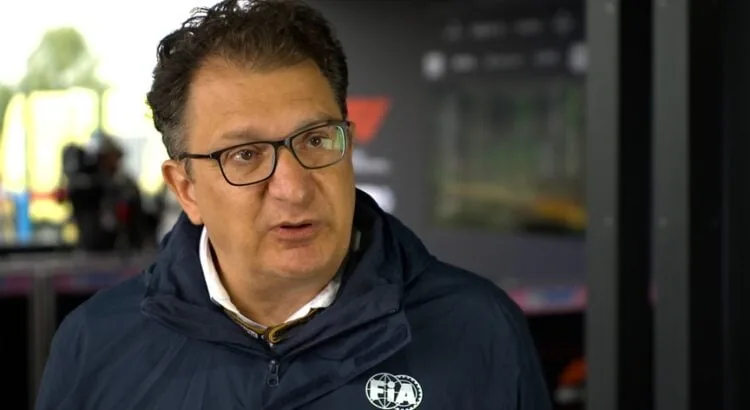
FIA technical director Nikolas Tombazis takes a very clear stance on the current situation of Formula 1 version 2026: no systemic crisis, but targeted adjustments to be made.
Read more Pierre Gasly refuses to aim small: Alpine urged to attack the top teams
In fact, the FIA recognizes two main areas for correction: drivability and safety.
The case of Oliver Bearman’s accident at Suzuka obviously serves as a warning point, as do the drivers’ own criticisms of overly artificial overtaking.
Beware of side effects
The problem does not lie so much in the accident itself as in its systemic origin: significant speed differences related to energy management (recharging vs deployment). Tombazis admits that this risk had been identified, but highlights a fundamental constraint in regulatory engineering: intervening too quickly can generate side effects more serious than the initial problem.
This is where his position becomes technically interesting. Unlike an aerodynamic or engine overhaul, the solutions considered focus on software parameters and operational settings.
Read more Abu Dhabi 2021: Lewis Hamilton’s heartbreaking reaction finally revealed
In other words, the FIA directly targets the control layer (engine mapping, ERS deployment, recovery strategies), which allows for rapid implementation, almost zero cost for teams, and an immediate reduction in speed differences on track.
Two-phase reactions
This choice confirms that the core of the problem is not purely mechanical, but systemic, related to the interaction between battery, deployment, and on-track behavior, a point also raised by several drivers and engineers in recent weeks.
Finally, the idea of a two-phase approach shows that the FIA seeks to balance responsiveness and industrial stability. Quick adjustments will address the urgency (safety, on-track clarity), while deeper evolutions could be introduced with a delay allowing engine manufacturers and teams to adapt.
In summary, Tombazis’s position is pragmatic: the 2026 regulations are not a structural failure, but an immature system requiring fine recalibration. The FIA refuses an excessive reaction and favors an optimization logic, which is consistent with a regulatory cycle still in a real learning phase on track.
Read more Verstappen challenged by his father: this crazy bet that could change everything